
Creative Nonfiction by Nicholas Herrmann
Die Grenzen meiner Sprache bedeuten die Grenzen meiner Welt.
– Ludwig Wittgenstein
“…father…sleep…American…go…”
I am in Serbia again, catching my breath, hoping for a breeze to cool the air. The accumulated heat from the building collects in the flat, a tropical microclimate localised to the top floor. With fistfuls of flannel shirt, I discreetly towel the sweat running down my sides. I picture a rip beginning in the brick, quickening along the wall, encircling us until my uncle’s home, made buoyant, groans free and rises into the sky.
We’re sitting in the lounge area — a shallow, wood-panelled anteroom that acts as conservatory, balcony, garden and porch. An assortment of chilli peppers, spider plants and parlour palms lines the walls. Green felt carpets the floor beneath wicker and plastic furniture, the stale smell of countless cigarettes embedded in sun-bleached cushions. A letterbox window, propped open, frames the dusky skyline of Stari Grad, the sound of traffic drifting in from the road below. On the coffee table: a newspaper from the day before, an ashtray, a lighter.
…England…big…I know…no…”
Meaning congeals at intervals. I listen to the familiar Slavic drone, soothed by the chirrupy inflections. Whenever familiar words pass by, I snatch them out of the air and store them up. If I collect enough, I might be able to piece together an understanding.
“…mother…I will not…Belgrade…”
We landed three hours ago. My brother and I have come to see our cousins, to pay our respects. Our parents are back at the hotel. They’re saving their strength for tomorrow.
“…of course…of course…brother…”
Earlier, my uncle’s wife gestured for me to sit in the chair I know is his, and I couldn’t say no. It’s impossible to say no to a Serb. Now I’m sitting in his chair and they talk about how, towards the end, he refused to move from this spot. I’m only able to understand because one of our cousins insists on translating. Embarrassed, we ask him not to — my uncle’s wife doesn’t speak English — but he won’t take no for an answer. He continues to heave the conversation between the two languages until exhaustion makes him forget himself, slip back into his native tongue.
“…fast…sad…nothing…”
I have never had a conversation with my uncle, and he’s not here anymore.
Нови Сад
Novi Sad is my mother’s hometown. It’s where she grew up, went to school, met her best friends, fell in love with George Harrison and Hermann Hesse, studied at university, met my father. Most of her family still lives there, and we try to visit once a year. But my connection with Novi Sad isn’t purely inherited — the small city in the Balkans has been hovering in my periphery for as along as I can remember: it has roughly the same population and proximity to its capital as Reading, my own birthplace; the majority of my friends have visited for the city’s famous Exit music festival; and it is twinned with Norwich, where I lived during my undergraduate degree. Eight years ago, I was crossing the Novi Sad Friendship Bridge on the way to the Norwich Odeon for the first date with my partner.
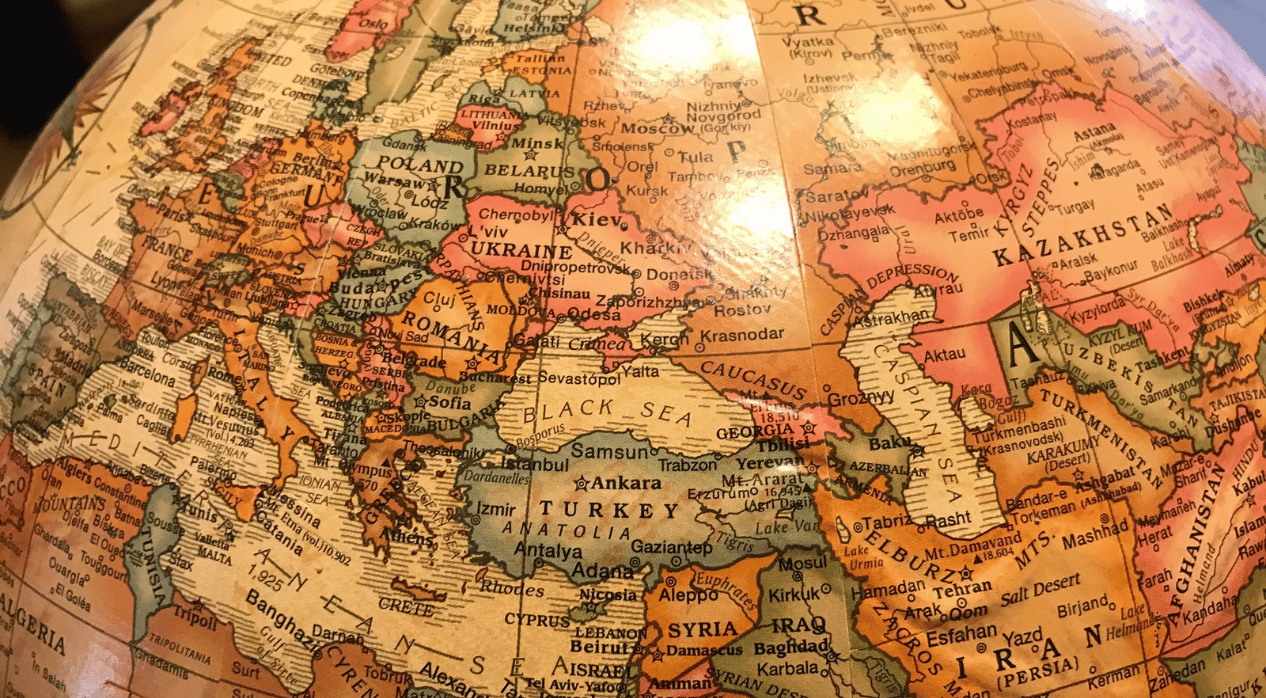
Novi Sad lies in the heart of Vojvodina, a region renowned for its fertile soil, and, like it’s sister Norfolk, famous for its flatness. The city itself is a place of cafes and churches, bakeries, and boulevards people stroll down on warm summer evenings to the banks of the Danube, that famous blue waterway that runs through Serbia on its way to Romania, Bulgaria, Moldova and Ukraine, before finally collapsing into the Black Sea. Perched on a hill above the river, the Petrovaradin Fortress — a fortress no enemy has ever taken — stands guard, its distinctive clock tower presenting reversed minute and hour hands for the benefit of the fishermen down below, their eyesight strained by the hunt for movement in dim light and muddy water. Since the town was officially founded in 1694, Novi Sad has belonged to various countries and kingdoms: the Habsburg Monarchy, Austrian Empire, Austro-Hungarian Empire, Kingdom of Yugoslavia, Kingdom of Hungary, Socialist Federal Republic of Yugoslavia, a brief stint in Serbia and Montenegro — the final chunk of former Yugoslavia to become independent — before, finally, the current Republic of Serbia came into being and Novi Sad could breathe a sigh of relief. The coat of arms depicts a dove with an olive branch flying over a meandering river and three crenellated towers. The towers have their gates closed and windows open.
Mlati praznu slamu
– Common Serbian saying
The previous paragraph didn’t come naturally. That description of Novi Sad didn’t flow onto the page. I knew hardly any of those facts before I sat down to write them. They required research, cobbled together from memory, Wikipedia, tourism websites, language dictionaries and poetic license. The section was run past my mother to check for accuracy. It may still include mistakes and controversial details.
I am not an expert. I am not fluent.
I am an English, second-generation Serbian immigrant with a German name possessing only one tongue. Like the Danube, in constant crisis, caught between language and landmass, I am fragments and I am incomplete.
“The towers have their gates closed and windows open.” I found this line somewhere during my research. When I was born, my parents decided not to teach me Serbian so that I would feel like I had roots. And it worked — like the gates on the Norwich coat of arms, Britain and its culture has always been open to me. I integrated seamlessly, never bothering to learn about the other half of my heritage, and now I have relatives in Novi Sad with whom I’ve never spoken. I’m able to communicate with my cousins in their twenties and thirties, but a barrier exists between myself and the older generations, and so a large part of my family history is cut off. I cannot fully access one half of my identity.
It’s possible for people to connect without language, by finding an affinity, sharing a smile, empathising, creating a moment where two distinct, disparate beings can reach across the abyss and find one another. Transmission is more difficult. It requires a full understanding, the total obliteration of barriers — it’s not only the act of reaching out, but of pulling across. A fluency. I have attempted to bridge this gap, to resolve the conflict between connection and transmission, to achieve a more meaningful — or more complete — communication with my culture. But somehow two terms of evening classes searching for my mother tongue succeeded only in orphaning me further.
Shamed for leaving the office early, running for trains, supermarket sandwiches in rush-hour crowds, more coffee choked back for focus, strangers and alien alphabets/genders/vocab/cases, then home and attempts to decompress, a scattering of sleep, the long commute back to work in the morning.
Ništa.
Ja sam Englez, ali ja sam iz Srbije
My mother is a linguist. She studied English literature at university, and has read more of the classics than I have. She has spent the majority of her life living in England and speaking English.
My father is a linguist. He studied Serbo-Croatian at university, and travelled to Serbia in his twenties where he fell in love with the country, the culture and my mother.
My brother is a linguist. He studied French and German at university, knows enough Spanish to get by, and is currently learning Arabic.
Until recently, it would be both of us sitting dumbly in smoky apartments, trying to glean the context, searching for meaning in facial expressions, relying on the odd translation. It was embarrassing, but we were united — a curiosity to the rest of the family rather than an insult. My brother and I bonded over our lack of communication. We would have our own private conversations beneath the laughter in the room.
He has now added Serbian to his list of languages, and I am left alone.
I am the anomaly. I am the outlier. I am the contradiction: an ear for music but not language, skilled with words but unable to retain foreign vocabulary. A writer locked inside the language I was born into.
I will keep searching for ways to shrink the divide, but I have to come to terms with the fact that for the moment — and the considerable future — I do not understand my heritage, my history, my second homeland. It’s possible I’ll never interact with fifty percent of my family. I will continue to form connections but fall short. Sharing emotion, affection, compassion, but missing ideas, anecdotes, concerns, hopes, jokes, memories,
etc. etc.
After the funeral, my father gives the eulogy to a hall filled with hundreds of my uncle’s friends and relations. He has no trouble speaking in a second language to these people he’s never met, has no trouble reaching them, the purest transmission of grief and love. I sit patiently, watching the strange faces — colleagues and cousins, friends from school — nod in unison, smile, even laugh. Nobody views him as an outsider. They have embraced my father as their own, an adopted son. People shake his hand as they file out, squeeze his arm, visibly moved by his words. A few days later, he emails me a translation of the speech and I read it alone in my room.
I stand in front of closed gates, looking through the windows. I have already missed so much while I have been locked outside, and I’m aware of the time pressure. The responsibility. My parents gave me roots in this country, and the ability to choose whether to plant more. It’s taken twenty-nine years, but I have reached a decision: I won’t be shut out forever. I may not have the key, but I have crossed the river and I can hear the dove calling. And as long as those windows are open, I can see a way in.
Nicholas Herrmann’s work has appeared in journals and online. His first novel was shortlisted for the Bath Novel Award 2017. Nicholas is a graduate of the Creative Writing MA at Bath Spa University, where he was shortlisted for the Janklow and Nesbit Prize. He is represented by A.M. Heath.
 Arcturus