
Creative Nonfiction by Toti O’Brien
a meditation on transit
In my mother tongue, the word city (città) is feminine. That is true for my second language as well. Ville is also feminine. Today, this is of little relevance — but I belong to a heavily-gendered era. Therefore, grammatical attribution of female or male roles to plants, animals, objects, abstract concepts, has significantly impacted my vision of the world.
In my mother (as well as my second) tongue, towns and houses are feminine. While growing up, I found that quite “natural.” After all, both are containers of people, and female individuals (until recently) were mainly identified by their potential ability to hold, shelter, temporarily host human life.
*
The introduction above, I admit, is unjustified — an initial, somehow capricious detour. What I mean to explore isn’t the grammar of cities, but their mapping.
Thirty plus years ago, I had returned to Rome after spending about a decade in Paris. A friend came to see me, and I chaperoned him around. At some point, we talked about a Parisian garden, and he asked me for detailed directions. As I tried to provide them, I felt lost. “Sorry,” I apologized, “Paris’ map has vanished from my brain, since I moved. Rome’s map has replaced it. I can’t possibly access both.” He was flabbergasted. A world wanderer, who had sojourned in various metropoles such as New York, Tokyo, Berlin — and Paris, of course — he started laughing. He adamantly declared nothing similar ever happened to him. Well, his mind’s capacities must have been much greater than mine.
Mine were and still are limited, city/map/wise.
*
In my youth I journeyed a lot, often stopping for long stays in towns where I lived and worked. I have fond memories of many. Each has left an idiosyncratic and indelible mark — an ambiance, a sensuality, a color, a tone. Only three of them, though, are embedded in me, map wise. Three and a ghost, to be exact. Paris, Rome, Los Angeles, plus the small Sicilian town of Messina.
I have stayed in L.A. for the last 28 years. I stopped visiting Paris 15 years ago, and my annual visits to Rome are really, really short. So the map of Los Angeles is the active one — has been for a long time. But the other ones, in turn, have been widely employed. If they weren’t deleted or trashed, their remains must be found somewhere. I would like to trace, unbury, say a word about these past and present cartographies. How diverse they are, and how differently they have shaped me.
Towns and the human brain have similarities, don’t they? Both possess a definite physicality. Both are built, and can be destroyed — let’s say by an earthquake or a tumor, by a war or by death. Both, though, are simultaneously made of connections from point to point. They are made of paths, without which they lose identity and function. Towns and brains are made of soft tissue or concrete, as much as they are made of invisible, immaterial, yet precious trajectories.
*
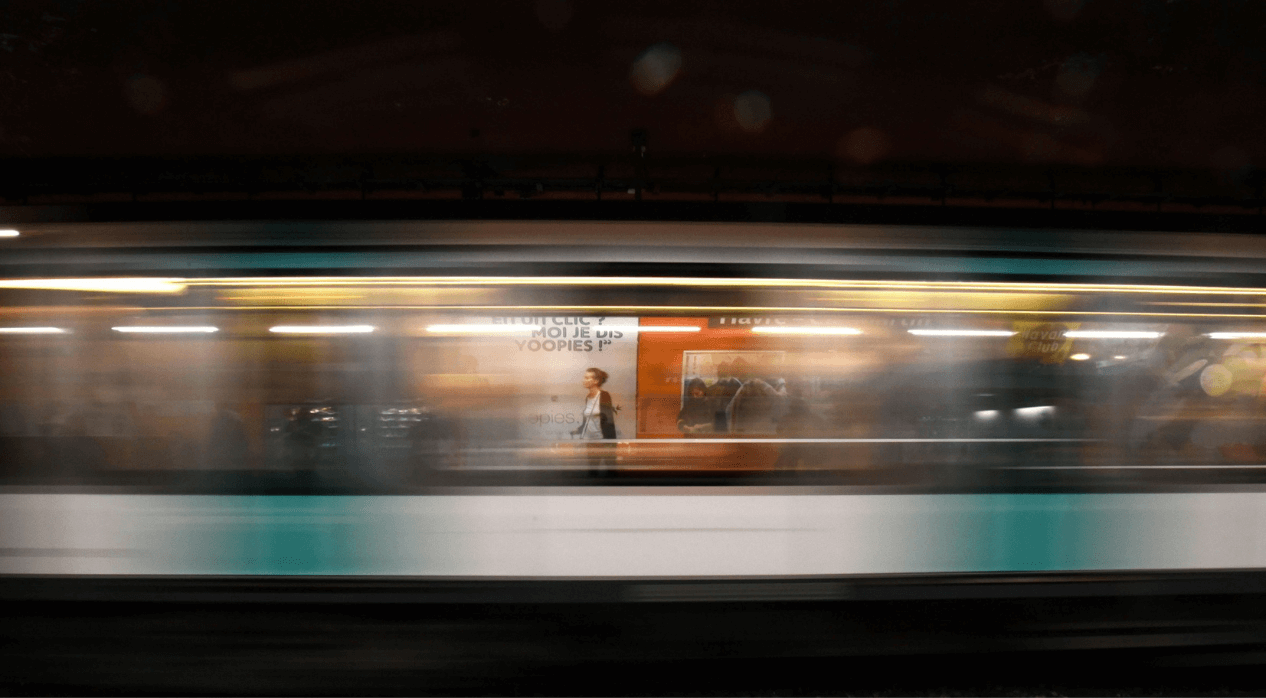
When I lived in Paris I didn’t have a car, and I never thought of acquiring one. It is well known that the French capital has a great metro system. Fast, cheap, frequent, it reaches everywhere, including near and far outskirts. It did when I was there, in the 1980’s, starting — I believe — at 6 in the morning. Ending at midnight? Perhaps later. There were many lines, marked with different colors, forming a thin-meshed net that closely espoused the town’s very shape. Maps were always at hand, in the street, the stations — of course, on the trains. They were easy to read. You could hardly get lost in the subway. Therefore, you’d soon get the illusion of knowing Paris, holding it in your palm, understanding it (which you literally did). You doubtlessly knew the town’s underbelly — which did not mean its secret, seedy core. No. The metro system (platforms, rails, halls, an intricate web of corridors — sometimes going on for miles) was brightly lit at all hours. Down there, time wasn’t measured by atmospheric variations, but by shifts in crowd size, composition, density, behavior, and motion. The conventions of time underwent a mutation in the viscera of Paris, where a new set of parameters ruled them. Same thing occurred to space that, being so quickly and so “blindly” crossed, somehow shrunk and became tamer, more domestic. Space, within the stylized universe of the metro, was purged of landscaping attributes and became mere distance — a sort of mathematical diagram.
The town was mapped by verbal cues (the names of the stations), sequentially organized. Its identity was a fact of nomenclature but, please, don’t think of it as dry, neutral matter. If possible, these names in the dark (in the bright, electrical glare soaking wagons, stairs, walkways) were more evocative, more resonant than the corresponding monuments or architectural features would have been, if perused.
If… because many stations would never reveal to the passenger their actual, “superficial” looks. Paris was, is, huge. Many metro stations would be, for a whole lifetime, just stations, just transit.
Some, obviously, would not. I, for instance, became well acquainted with a number of neighborhoods where I lived and worked. I traversed them on foot, absorbing what I would have of any other town — the interwoven patterns of built, natural and social environment in their tremendously detailed singularity. Houses, bars, roofs and gutters, public squares, dogs on leashes, fountains, smell of bakeries and the dubious pink of the butcher’s display, iridescent puddles, umbrellas, market rumpus and shrieking brakes, lines at the post office, blaring horns, rushed pedestrians, movie theaters marquees, heels ticking on cobblestones. All that, solely Parisian — vertical and gray, both ugly and elegant, both querulous and proud, arrogant and passé. Also, so varied for each arrondissement or banlieue, so architecturally and humanly dappled. I essentially walked the distance between my apartment or workplace and the nearest metro station. Sometimes, I took a bus that would bring me to the metro. Those areas, which my body acquainted in the open, I knew well, and of course they shaped the sentiment of Paris within my mind/memory, heart/emotions. But because I seldom transitioned from one to the other en plein air, their actual contiguity, the way they juxtaposed, how this neighborhood led to the next one, remained sort of blurred.
The town was, somehow, an archipelago — and yet solid underneath, at the bottom, where all islands connected.
The subway had its unique odor, of course — an indefinable mixture of human and mechanical tangs, slightly sour, most dusty. Similarly, it had its unique polyphony/or/cacophony, also a combo of transient-organic and mighty-metallic, mineral.
It tightened the town in its fist, swallowed it and digested it, spitting out bits and pieces, now and then.
I said the stations — spelled by a recorded voice every few minutes — weren’t anodyne, just words. At least, not for me. They were loaded with mental and emotional associations, following both what their names evoked and, perhaps more importantly, the place they occupied in the virtual geography of my transit. Tiny spots, where no one left or came in, big crossroads where many lines intersected, those that seemed to accelerate my progress towards a longed-for destination, those that seemed to keep me back, to delay my arrival. Those who made me want to evade, flee, get lost. Those that scared me, those that reassured me. The facetious, the serious. The glorious, the sad. The obsolete, the pretentious. Those who seemed trendy and rich, those who felt old and poor — though virtually, nominally, map wise.
This variety was somehow unified by a sole, unmistakable “underground feeling” — an incongruous compound of monotony and urgency, summing up to a pervasive aura of unyielding necessity. Rather, ineluctability. Paradoxically, both smothering and comforting — maybe due to the certainty that you would arrive, yes you would, if you wanted it or not. The train, station by station, would bring you there. Fast. No leisure. No cruising. No detours. On the contrary, a steady rhythm and pulse — delays, strikes, accidents notwithstanding. Still… you would arrive.
I knew the metro system by heart. I believe I could recite stations like the rosary I was taught to spell in Catholic school. Perhaps, stations were saints, or the myriad adjectives honoring the Virgin. Probably, they were. I believed I knew Paris well. Honestly, I did. Not only was I immensely familiar with many neighborhoods, I could also reach anywhere without any trouble, night or day, by subway. The map with its many, pretty colors, was permanently etched in my brain.
Until the day I left and moved to Rome, Italy — where the present musing intends to go as well. But I’d like to zigzag, a little.
*
At the end of 1994, I permanently moved to Los Angeles, the town where I presently live and that — after three decades — I love, unconditionally. I believe I know it well, if such a thing is possible with regard to an urban extension so wide, scattered, and apparently dispersed.
It isn’t dispersed for me, as my brain holds it within the quiet, readable, neatly designed grid.
L.A. is a virtual city, like Paris, as far as its materiality is abstracted and summarized by the freeway network that crosses it, unifying areas so distant, they would otherwise be entirely unrelated. Public transportation, though it has significantly improved in recent decades, is too sparse and slow — eminently impractical as it comes to real life. Therefore, Los Angeles means getting into the car and taking the freeway, then getting into the car and taking the freeway, then doing the same, and the same, with stationary pauses in between.
Freeways are punctuated by exits — with green signage spelling their names — that function as metro stations do in other cities. Like in Paris, several of these exits lead to areas of town where one will never go. They will remain symbols, loaded with diverse echoes, based on their role in the unraveling of the journey as well as on their names (often Spanish, therefore mysterious-sounding to the Anglophone portion of travelers).
The internal view of the town, like for Paris, will inevitably be a collage of high-res, detailed islands linked by strings of markers, providing overall unity. With the huge difference that, in L.A.’s case, the city-as-a-table-of-contents occurs outside. Not in the artificial glare of the subway, but under implacable sunlight filtered by tinted spectacles, which aren’t a matter or style or a fashion statement, but an indispensable tool for enduring brightness. In L.A., unlike in Paris, we see the transitions, how this melts into that, West-side to Mid-city to Downtown — though, we apprehend the shifts in an abstract manner, smoothed, abridged by velocity.
As it happens when traveling by metro under Parisian boulevards, driving on L.A.’s freeways twists our perception of the space-time continuum. It does it otherwise… It is harder, in L.A., to lose track of spatial proportions, as the city is under our eyes. Somehow, it runs along, following or preceding us. The huge urban expanse is in plain view and yet, because the highways cross it at street level or even above it — sometimes, up above — a distortion occurs that makes it smaller. Tamer, more domesticated.
From the highway, the urban landscape has the same visual impact that mountains, sky, tree line, coastline have — the mighty natural features on which buildings graft themselves, after all, like smaller addenda or footnotes. The bluish, serene range of the Saint Gabriel mountains dwarfs Downtown’s tallest skyscrapers. So the town appears hugged, embraced, framed, certainly contained by nature, and that makes it somehow less fierce, less ferocious.
There’s a sweetness one can only — or especially — sense while driving on the freeway, no matter if gloriously navigating an early Sunday morning or if stuck in rush hour. I should call it a meekness, or innocence, in the way neighborhoods single-file like first-graders going out to recess, rows of houses mimicking long lines of diligent palm trees that concertedly point here or there, giving directions, bent by the desert wind. Streets, hills, canyons or beaches scroll like old movie reels, which isn’t surprising.
*
I was born and spent my childhood in Rome. Though the Seine, in Paris, is strikingly prominent — so are the quais, bridges, islands, the boats and barges, such a distinctive part of the town’s core — I never considered the river as the arteries-and-veins, the circulatory system of the city, either because I never lived near it, or because the blood of Paris, for me, was the metro (its tunnels, its rails, its corridors). Doubtlessly, Los Angeles’ vessels are its freeways. While in Rome, the Tiber is where I felt the pulse throb. What anachronism. No, it’s not Venice. People don’t take the boat. They take the bus and drive, in spite of the parking nightmare in a downtown that is a protected area, not allowed to expand beyond cart/horse size. People walk, and walking is both feasible (distance wise) and great — as, for instance, in the historical sanctum called the “center,” each footstep reveals an exquisite scrap of artistic marvel. But, in other areas, pedestrians are still graced by pervasive beauty. Of color — bricks, walls, roof tiles bathed in reddish ocher complementing the charcoal of cobblestones, the dark green of pines, the soft green of sycamores. Of shapes — the interplay of closely juxtaposed, round hills, echoing round domes, with the horizontal caesuras of balconies, porches, terraces hosting miniature gardens.
As the town is efficiently and pleasantly walk-able (not just ist monumental enclaves, also, its popular neighborhoods), it is possible to gain full-body awareness of a large portion of Rome, to the edges of which one can add the rest, firmly locked, fitting in like the pieces of a puzzle do, once the general picture is formed.
At the center of the center, the Tiber draws its elegant curve. It’s a magnet. One will never be lost as long as one keeps a sense, even vague, of where the water is. Following its course, upstream or downstream, is easy. Bridges are the markers parsing the journey, metering the progress.
The stream also functions like a break. A pause. Like an afterthought, maybe a meditation of sorts. Even through traffic chaos, pollution, loud noise, tourist crowds, stifling heat, crossing one of the many bridges is a rest, a suspension. A ritual.
I loved Rome’s many peripheries, the horror developments of the seventies through which, though, nature filters in. The campagna romana, the rural soul of Latium, the simplicity and poverty of the region infiltrate the papal pomp of the capital, which frays at its borders, reclaiming its peasant identity. I loved Rome’s harbors, Fiumicino and Ostia, unpretentious and drab. Overcrowded beaches, foamy, soiled waters — and yet, oases — the vacation working classes could spare, the only one.
*
I loved Rome and still do, but almost against my will. It’s a love out of habit and closeness, not of choice. As a child, I didn’t want to live there but in the town of Messina, Sicily, where my grandparents were and I spent many months, each year. Quite incongruously, the allegedly ugly, tiny city of Messina for me established a canon of beauty, and I doubtlessly deemed it superior to the world-renowned capital of my birth.
The reasons of my preference, sure, weren’t of an architectural kind. But emotions weave themselves so tightly within — literally — the concrete, the mesh cannot be unraveled. Therefore, Messina’s physical features grew so dear to me, I ended up unconsciously measuring city landscapes, all over, against its paradigm.
After the catastrophic earthquake of 1908, the monumental core of the town was never rebuilt. The town wildly, almost spontaneously grew back without an ordering vision. Here is a long stretch of low buildings — no more than two stories high — relatively new, dull in color, messy, devoid of style… Terraces prevail over roofs, resulting in chromatic monotony (no shift from walls to tiles). Moreover, creating an open, meek, defenseless feeling. Also, welcoming.
The town stretches in length before the Strait of the same name, dwarfed, muted by the glory of the Mediterranean insinuating itself between the Italian peninsula and the Sicilian island. The sea is very deep in the Strait, traversed by powerful currents (which originated the myth of Scylla and Charybdis). Mighty winds constantly change the tide, providing spectacular shifts of color. The sea claims this corner of the planet, only sharing it, in case, with the proud profiles of the mountains on both sides. The sea permeates the town at a molecular level. Messina doesn’t have a harbor, as Rome or Los Angeles have. The city is the harbor, nothing more — soaked in its smell, its salt, echoing its many voices.
Squeezed between the shore and the mountains — so close, they seem to push forward, seeking the cool watery embrace — the town can only expand longitudinally, un-graining itself like a rosary, perpendicularly indenting the slopes with protrusions like the prongs of a comb, clustered within narrow canyons (dry river beds, going from mountain to shore at regular intervals).
Those intersecting canyons (torrenti) are the posts, the milestones allowing orientation, signaling one’s relative stance. Otherwise, the whole town resembles, almost repeats itself, though the sparse landmarks — the cathedral, municipal garden, main square, cemetery, train station; a bit further, the salt-water lakes where mussels are bred, this or that beach, the pole signaling the narrowest point of the channel, the lighthouse — to the child that I was mapped a fascinating geography, and a magical journey.
Quite a simple map, taking little room in my brain — a lot in my heart.
*
Still, as I had to admit once, my brain seems to erase — to archive, at best — city maps except for the current one, which it sort of embeds in its circumvolutions, making orientation a natural, unreflective activity. As if the city where I live and I, somehow, melted, becoming one female body — a contiguous container.
Sometimes though, deceptively, shards of L.A. remind me of Messina. Fragments of various cities adjoining the ocean do. Briefly. Sometimes, city maps — after all they are abstractions, neural paths, synapses at work… as dreams are — momentarily overlap, converse, mix and mingle.
Toti O’Brien is an Italian Accordionist with the Irish Last Name. Born in Rome, living in Los Angeles, she is an artist, musician and dancer. She is the author of Other Maidens (BlazeVOX, 2020), An Alphabet of Birds (Moonrise Press, 2020), In Her Terms (Cholla Needles Press, 2021), Pages of a Broken Diary (Pski’s Porch, 2022) and Alter Alter (Elyssar Press, 2022).
 Arcturus