
Fiction by Alice Rhoades
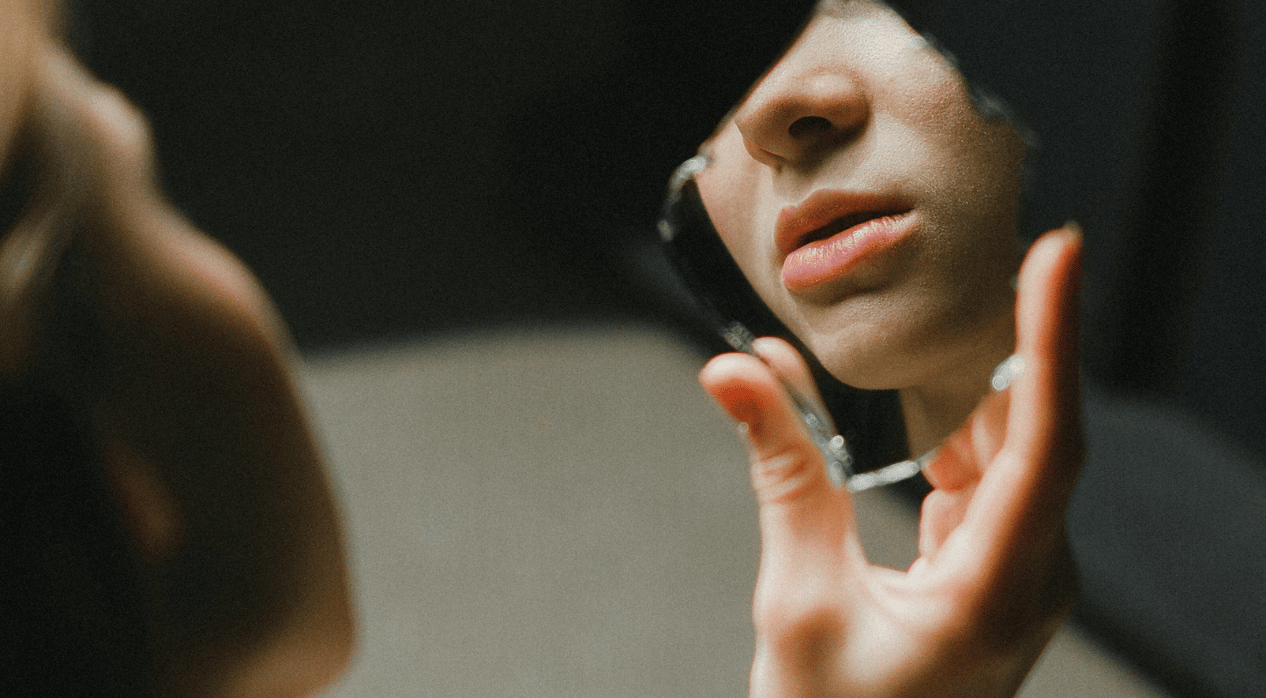
People have always told me that I have a pretty face, and for the most part I have agreed. I study it today while I brush my teeth. High cheekbones and an angular jaw. My nose, small and straight, is slightly fleshy on the end but it could be worse. It was always my eyes that were not quite right. Too small and close together. For most of my life, I envied my sister Natalie’s eyes, they were large and blue, defined by dark lashes. Makeup helps with the lashes but not the size. I gave up makeup almost a year ago, and after today it will cease to be a thought.
I spit into the sink and watch the frothy bubble of saliva and toothpaste slink down the drain before returning my attention to the mirror. Just last week a young woman at the gym told me I had great skin for my age. My eyes trace the fine lines of my face. My eyelids are beginning to sag and the fissures across my forehead are deepening. Crow’s feet have started to crackle from the corners of my eyes and faint marionette lines frame my mouth. There was a time in my life where that comment at the gym would have sent me straight off to the aesthetician to pump my face with anything and everything until the lines disappeared. But last week it didn’t faze me. When the girl asked me what my secret was, I handed her the card with Marianne’s QR code.
In a past life, I was that gym girl, always looking for the secret. Spending too much time and energy on my appearance and still hating the way I looked. A smirk breaks out across my face as I recall a period in my twenties when I trained myself to smile while keeping the muscles around my eyes relaxed to avoid wrinkles. Now I make a series of faces in the mirror to crinkle the skin as much as possible. When I can’t make any more lines, I squish the flesh with my hands.
I maintain eye contact with the woman in the mirror as I release the skin and watch the red lines linger and fade.
*
It is still early and only a few people are in the dining room. This room reminds me of a Malibu rehabilitation center. Large plants and cushioned seats give an air of luxury but the manufactured tranquility cannot drown out the clinical atmosphere. I pick up a plate of food and a supplemental smoothie. Upon my arrival I was pleased to find that the plates were heavy and ceramic rather than the light plastic you would expect at a typical cafeteria. Even today, the weight makes me feel grounded and gives a sense of authenticity to the journey we are embarking on.
Two eggs stare up with wobbly yolk eyes. Two pieces of toast glisten with real butter next to half an avocado and a mound of vegetable hash. Just twelve months ago, I would not have indulged in so much fat and carbs–but now I trust in the process.
I choose a seat near the window to watch the morning fog burn off across the lake. Chloe enters the room and, although I avoid eye contact, she sits across from me before asking if I mind.
Chloe is just finishing her first week. She is a sweet girl but she still relies on empty small talk and a feigned energetic ditsiness. You wouldn’t know she was a successful lawyer by the way she prattles on about men. I try to have patience, lift other women up, you know? But I’m not in the mood for company this morning. She chats quickly and eats slowly. Slicing her food into smaller and smaller bites, rarely lifting them to her mouth.
“Oh my God, today is your last day!” she squeals, grabbing my forearm. I don’t understand why virtual strangers feel comfortable touching me. In high school, our varsity track captain was incapable of speaking to you without a hand on your elbow. I trained myself not to recoil when touched but I don’t enjoy it. “How are you feeling about it?” Chloe asks. “Any doubts?”
“I feel great. Ready.” I reply.
“Wow, so good to hear! I love that. You must have the record for fastest approval ever, you’ve only been here for, what? Three weeks?”
“Second fastest,” I clarify “At least three other people have been approved in less than a month, but it’s not a competition. It’s a process and we are all ready at different times.”
“I hope I feel the same when I’m ready.” She looks up at me, probably for reassurance but I busy myself pushing an egg onto the toast. “I mean, I think I made the right call and obviously they accepted me too. But still it’s a big commitment.”
Commitment. I used that word too when I told Natalie.
“This isn’t commitment, Rachel. It’s commercialization, bastardization.” I hear my precocious younger sister’s voice, her beautiful blue eyes, staring at me, incredulous.
“Yeah, it’s not for everyone,” I say to Chloe, staring at the tiny bite she was preparing to take.
She notices and spears more food with her fork, moving it to her mouth without breaking eye contact.
“Definitely not for everyone,” she agrees “but a woman’s power is only borrowed as long as she plays by the rules of society…”
“Reclaiming that power requires us to redefine the system,” I finish. Is she testing me or is she trying to impress me with her knowledge of Marianne? Either idea annoys me. I’m certain that everyone here has read everything Marianne ever wrote. The Program isn’t officially affiliated with the late writer and activist but there is no doubt that it was born from her philosophy.
Chloe grins at me as if proud of a star pupil. I’ve already made it through The Program, I don’t need her help figuring out if I am in the right place. She should be reflecting on her own motivations rather than quizzing me on the underlying philosophy. “Do you worry about how your clients will react to you after The Procedure?” I ask. I relish the idea of men being intimidated by me
“Oh, not really,” she says, “I am going to go for more of a natural look. I don’t want it to be obvious that I’ve had work done.”
“Hmm,” I say, as I mop up the last bit of yolk and excuse myself, leaving Chloe to methodically slice her avocado. She would likely be there awhile. Guests were required to finish their entire plate for the first few weeks.
*
The next morning, a large white van arrives to shuttle me to my appointment. The clinic is shared by a regular cosmetic surgery office and it makes me feel uneasy. A tan woman with black hair and a face full of filler checks me in. The floral musk of her perfume hits me before I finish signing in. I wish I could have remained at the retreat for the actual procedure but The Program requires that we reenter society before making the final call. The receptionist types with the pads of her fingers to protect her long acrylics and gazes at the screen with her frozen face and permanently-pursed lips. I hear Natalie’s voice in my head accusing me of being elitist. The receptionist passes me some forms to sign. Her hands are smooth and smell like cocoa butter. My own nails are unpolished, the backs of my hands crepey and littered with age spots. I marvel at how quickly old insecurities return in the real world. A sweat breaks out at the back of my neck.
Taking a seat, I remember my mindfulness training. Exhale self-doubt, inhale confidence. Exhale conformity, inhale transcendence. The office door opens and a woman bearing the marks of The Procedure peeks her head out of the door. She calls my name and I feel saved, confidence restored.
*
Natalie was pissed when I told her about The Procedure. “Why can’t you just be happy with yourself?” It was the same thing she said the first time that I got a little too much lip filler. When she chided me about the lip filler, I hated how ashamed I felt. It must be easy to not be self-conscious when you have a pixie-like nose and long blonde hair and dark lashes over large, blue eyes. Natalie never seemed to care what people thought of her. When she was in 9th grade and I was in 10th, she read an article about French women never shaving their armpits or legs, so she stopped shaving. It was the dead of winter when she made this decision but I still made fun of her when she ran around the house with her furry legs and underarms. The first warm day in March, I was mortified when she donned a short dress. Her shins covered in dark brown down and long hairs snaked their way out from the cap sleeves–but her confidence was unshaken.
A few days later, noting she had not become a social pariah, I thought of wearing shorts when I hadn’t shaved my legs. My hair wasn’t nearly as long as Nat’s but it came out in thick, short hairs that looked like ants marching up my leg. I couldn’t stop looking at them. Crossing and uncrossing my legs under my desk to hide the worst of it. I snuck off to the showers during lunch hour and ran one of the razors that they keep for swimmers over my legs in the bathroom until my legs were angry with small red bumps.
*
The cold plastic seat presses up against my thighs through the thin paper gown. The nurse takes my vitals when she returns. All healthy. I step up on the scale, remembering when I used to ask for the number not to be read out loud. Today, I stare blankly at my weight. My body was the hardest thing to get back. I think of years wasted quietly counting calories, subscribing to fad diets and the latest exercise trends. Constantly oscillating between fear of being too fat and too skinny; I didn’t know what my real body was supposed to look like.
The nurse injects an anesthetic beneath the surface of my skin. The needle stings as it enters my face but I barely notice the pain. Tingling gives way to numbness as the nurse prods each area, until I confirm I no longer feel anything. By the time the doctor joins me, I find it hard to form words and nod along as she explains what will happen next. . I’m not scared but I miss my sister.
I still remember the day she came over with her beautiful blonde hair chopped off. It was cropped so close that you could see the paleness of her scalp through the stubble.
“I’m free!” She dumped her coat on my armchair as she entered my apartment.
“From what? An asylum?” I asked, noting the inconsistent depth the shears had cut across her head. She must have done this to herself.
“All my life people have told me what pretty blonde hair I have. Chop. That’s the end of that conversation starter. Turns out my hair is actually brown when you get to the root of it.”
“You think people are going to stop talking to you because you’re a brunette? A shaved head might be more noteworthy than hair that is long and blonde.”
“But my goal is not to not be noticed. My goal is not to be noticed for being pretty.”
“Ha!” Only people as pretty as Natalie would complain about being pretty. “What’s wrong with being pretty?”
“It’s so terribly mundane! Everyone is pretty or at least trying to be pretty. Wouldn’t you rather live life at the extremes? We are held captive by the beauty industry, and I’m sick of it. Do you know how much I spent on my hair alone last year?” I know the cost of Natalie’s annual haircut and highlights is negligible compared to my six salon visits a year; not to mention the Botox, lasers, and countless products recommended by my dermatologist who is so good she doesn’t take insurance.
That’s when she pulled Dr. Marianne Fitzgerald’s book, Skin Deep, out of her bag. It’s just like Natalie to buy a book when she is excited about something. While the rest of the world exists on bite-size bits of information through TikTok and YouTube, Natalie likes to inhabit her own bubble as she soaks up information. Free from the influence of the comments sections and suggested videos, she reflects on what she reads and forms her own opinions.
I am the rest of the world so I stayed up late watching Marianne Fitzgerald’s videos on YouTube and following her disciples down the rabbit hole of the internet. Of all the trends and hobbies she had tried to pull me into over the years, this was the first that spoke to me
I’ve always been close to beautiful – by Western, conventional standards, that is – but I was never quite there. People always say it’s what’s on the inside that counts, but I realized from a young age that people are a lot more willing to excuse the faults of the inside if the outside looks good. I was always pretty but never stunning. I always felt like if I just tried harder, had more resources, then I could achieve perfect, enviable beauty. The irony of being young is that you have the most to work with naturally but you lack the resources to enhance it. By the time I had the resources for enhancement, I was playing catch-up. Botox prevents a lot but I already had fine lines by the time I had the disposable income. Fillers helped a bit and a blepharoplasty picked up the sagging skin on my eyelids but it wasn’t quite the same as youth. Skincare was a religion but Marianne offered an escape.
*
Two days following the procedure, I am off pain meds. On day three, I’m discharged. Back in my Manhattan apartment, I cover the mirrors to avoid looking at my entire face until I’m fully healed. The gauze plastered over dried blood and antibacterial ointment reminds me of thick strips of bacon. I change the dressing every other day with a small hand mirror balanced on my dresser, removing and replacing strips one by one in a clockwise spiral. Changing the bandages around the delicate skin near my eyes is particularly painful but I still have no regrets. Eating has been a challenge as the lacerations around my mouth tighten when I make room for a fork full of food. My diet has consisted of soft foods lately but I have continued to eat everything.
When the wounds are healed and the last bits of pink have faded from the edges, I uncover the mirror to examine my new face. Deep grooves cradle the apples of my cheeks and frame the edges of my mouth. Cracks spread out from the corners of my eyes and three large valleys line my forehead, intersected by smaller crevasses that travel perpendicular to them. The wrinkles that were beginning to form are now inescapably carved into my face.
“It’s perfect,” I tell Natalie when she comes to visit.
“I’m happy you’re happy,” she says but she looks sad. The skin at the corners of her mouth has started to sag and bags under her eyes hang heavy.
“I’m free, Nat. No more fighting the signs of aging. I can let that all go.”
I watch her shift uncomfortably in her chair and I try to remember the girl who used to coach me on how to ride the subway. “Don’t look at the ground, but don’t make eye contact with anyone either. We are locals, not tourists,” she said firmly. Now, I wonder what 8- and 10-year-old tourists would ride the subway alone. Today, she looks neither at the ground nor directly at my face.
Alice Rhoades is a Chicago-based writer. She received her MPH from Johns Hopkins University in 2020 and writes content about data, technology, science policy, health, and wellness. She is workshopping her first novel with StoryStudio Chicago and The Tiny and Cute Writers Workshop.
 Arcturus